Posts

Showing posts with the label Asia

Maafushi Island

Image
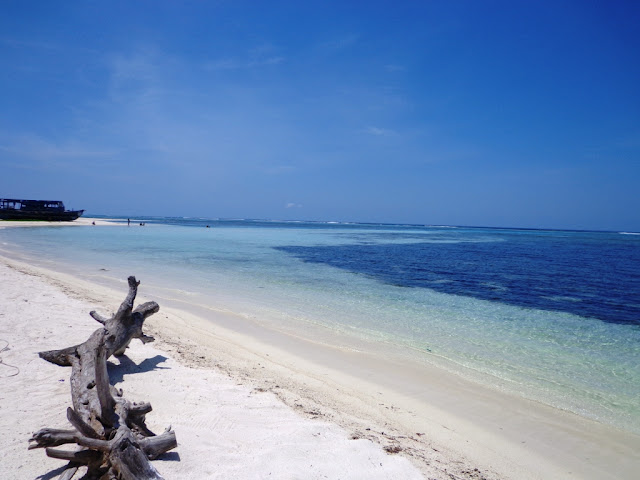
Travel Dates: July 25 to August 2, 2015      By the time we arrived to Maafushi Island, we don’t have a prior hotel booking, but some staffs from nearby hotel were waiting at the port and offered their room to us.  We followed them and stayed at Picnic Inn for 45 USD a night. This is for off-season rate, because it is 2-3 times higher during peak season.  Then we moved to Dhonveli View and Narnia.        Staying in hotel in a local island will save you a big amount of money for accommodation and food.  While a private island resort with beautiful white sand beaches and over water bungalows will cost you about 500-1500 USD a night for a room only.  But we don’t want to get stuck in one island and will not get to experience the daily life of locals.      The next day, we went for snorkelling with a lunch at sand bank.  Riding a speed boat with other tourists, our first stop was Banana Reef. ...

Batad and Nagacadan Rice Terraces

Image
     Riding a bus on our way to Ifugao once again is not to see the famous Banaue Rice Terraces, but this time to see the Batad and Nagacadan Rice Terraces, both listed as UNESCO World Heritage Site.  Batad Rice Terraces      Not knowing the difficulty of the hike can be of advantage somehow, because it gives you the courage to go on.  Well, the guide told us that it was 2.5 hours going down and another 2 hours to the falls.  And he said in a humorous way that after this trip we will curse Batad for the experience it gave us.  Oh yes, at first it was easy to go down which I can manage to walk for hours until we reached the restaurant with the magnificent view of Batad Rice Terraces.       After feeding ourselves with nutrition, we started our hike again, this time to the Tappiya Falls .  We traversed through the rice paddies of Batad and once we got to the middle, we were amazed with the stunnin...

N Seoul Tower

Image
     One of the most popular attractions in Seoul is the N Seoul Tower located at Mt. Namsan.  At the observatory tower, you will enjoy the 360 degree panoramic view of the entire city.  During the night, the tower illumination changes its colour from time to time.  There’s also a fence covered with thousand of padlocks installed by young lovers.  If you are young at heart and a fan of teddy bears, you can also visit the Bear Museum.  And have a romantic lunch or dinner at the N Grill revolving restaurant. Admission Fee to N Seoul Observatory: Children (Ages 4-12) - 3,000 KRW Adults (Ages 13-64) - 7,000 KRW Senior (Ages 65+) - 5,000 KRW How to get there? Take a subway to Chungmuro Station (line 3 or 4), exit 2 to the right of Daehan Multiplex entrance.  Take the yellow bus 2 in front of the subway.  Then, get off at the N Seoul Tower bus stop. N Seoul Tower Pavilion next to N Seoul Tower Mongm...

Gwanghwamun Square (광화문광장)

Image
     Near to Gyeongbokgung Palace is the Gwanghwamun Square , formerly the Yukjo Street.  It was opened on August 1, 2009 as a symbolic square that signals new directions for a humane and cultural society with openness and mutual respect.  The 6.2 meter high bronze statue of King Sejong the Great and Admiral Yi Sun-Shin stands at the plaza with the back drop of Gyeongbokgung Palace.  Also, some of the main inventions from King Sejong reign are on display here. How to get there? Take subway to Gwanghwamun Station (line 5), Exit 2 Sundial Celestial Globe Rain Gauge

Jongmyo Shrine (종묘)

Image
Jongjeon houses the spirit tablets of the kings and queens with many accomplishments.      The Koreans have always placed importance in preserving their cultures and traditions.  They preserved and restored well their cultural sites.  One of the most beautiful shrines I’ve seen so far is the Chongmyo Shrine or Jongmyo Shrine.      I loved it and enjoyed every minute and every part of this shrine.  Even the ambiance is so peaceful and cold.  I’m glad my friends granted my wish to visit Jongmyo Shrine, a UNESCO World Heritage site listed in 1995.  It was built by King Taejo of Joseon Dynasty (1392-1910) and embodies Confucian ideals.      Jongmyo Shrine houses the spirit tablets of the kings and queens of the Joseon Dynasty.  In addition to the tablet, there is a panel listing of king's accomplishment.      From the entrance, the slightly raised path called samdo path will lead y...

Gyeongbokgung Palace (경복궁)

Image
Geunjeongjeon Hall contains the royal court      I love palaces!  Whenever I travel to another country with palaces, I want to make sure that it is added in my itinerary.  With so little time in Seoul, and so many palaces to visit, we prioritized the Gyeongbokgung Palace, which is the largest and grandest among five.      Gyeongbokgung Palace was built in 1395 by the Joseon Dynasty, but it was destroyed during the Imjinwaeren War (Japanese Invasion, 1592-1598).  Later on, during the reign of King Gojong (1852-1919), all the 7,700 rooms were restored.      Remarkably, the most important edifices of the Joseon Dynasty, Gyeonghoeru Pavilion, and Hyangwonjeong Pond are still intact.  Woldae and the sculptures of Geunjeongjeon (The Royal Audience Chamber) shows past sculpture of contemporary art. Admission Fees:   Adult (19-64 years old) - 3,000 won   Children (7-18 years old) - 1,500 won   *Clos...

Capas National Shrine

Image
February 24, 2013      Ryan and I both love history, so we made a side trip to Capas National Shrine after our trip to Mt. Pinatubo.  We even convinced my friends to follow us there.  As what they said “Humi-history na naman kami.” :D      The Capas National Shrine is located in Brgy. O’ Donnell, Capas, Tarlac.  This is the area where the Bataan Death March ended.  An obelisk was built here as a reminder of the Filipino and American soldiers who perished in Death March during the World War II.  A black wall surrounding the obelisk shows the engraved names of the Filipinos and Americans who died in this location, the statistics of the total number of prisoners and deaths, and the poems for peace.       You can also see the box car that used to transport Filipino and American prisoners.  About fifty to sixty men were forced into this car by Japanese soldiers during the intense summer heat of ...

Capas Death March Monument

Image
February 24, 2013      On our way to Mt. Pinatubo, we dropped by at the Capas Death March Monument which marks the World War II concentration camp.  The monument depicts the heroism of the Filipino and American soldiers, while the other part shows the cruelty of the Japanese.       The park can be a nice and quiet place for recreational area, but is not well maintained by the government.  I wish they do something to revive the park.              

Mount Pinatubo “The Sleeping Giant”

Image
Travel Date: February 24, 2013       When I was just a little girl, I remembered how the Mount Pinatubo erupted in 1991 during the rainy days of June.  It was known as a sleeping giant that awakens after centuries of being dormant.  The eruption was so strong that we even received an ash fall in Alaminos, Pangasinan.  I will not elaborate how much destruction it created.  But today, its crater is a beautiful lake to behold.  A popular tourist destination, not to be missed by an adventure seeker like us.      From Angeles City, we drove for an hour to reach Sta. Juliana, Capas, Tarlac.  Upon reaching the town, we registered and paid at the Tourism Office for our 4x4 ride and tour guide.  We were supposed to meet fellow couch surfers during that time, but they arrived earlier than us.      So we moved on with our trip, riding the 4x4 jeep.  The ride was so bumpy that you need to hold on tig...